Contractor Pleads Guilty in Scheme to Divert AI Servers With Nvidia Chips to China
10/12/2026 / By Belle Carter
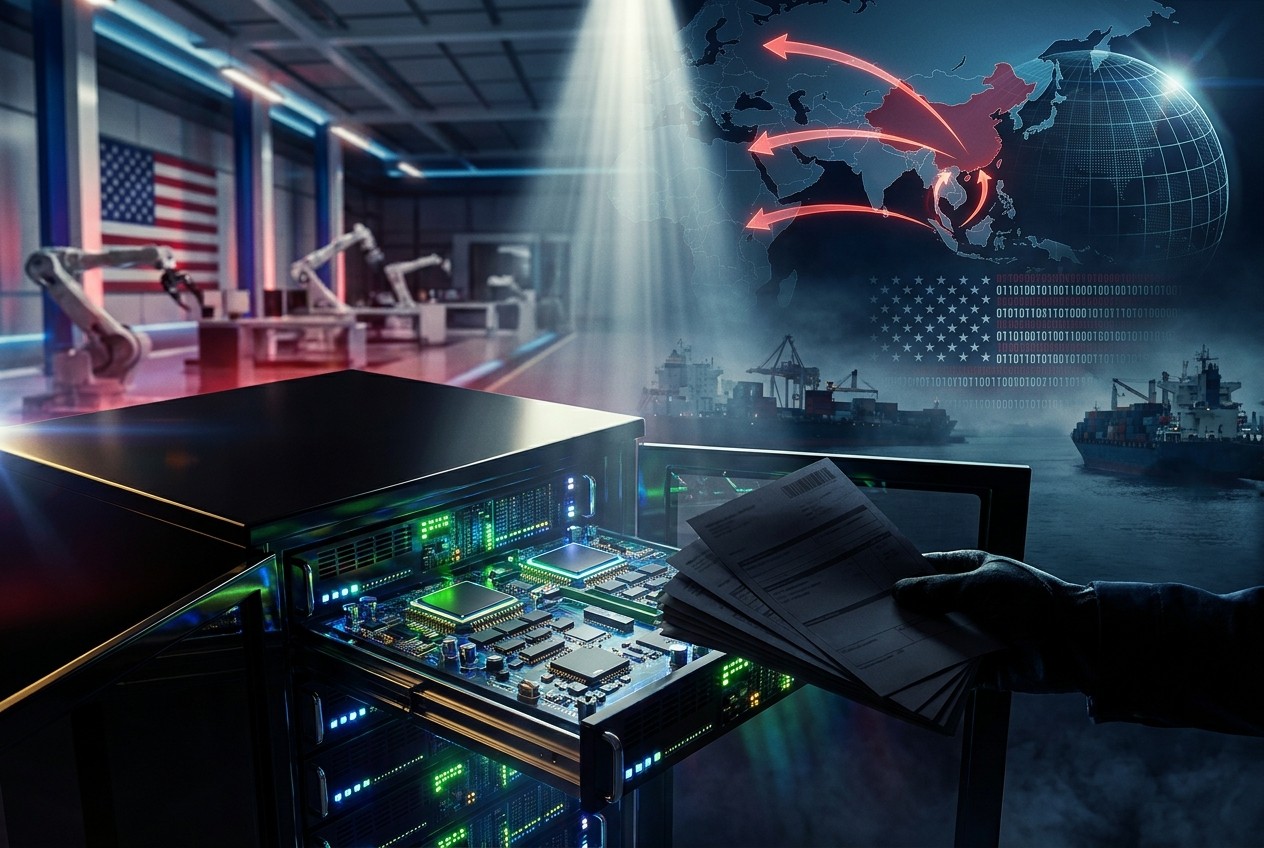
A contractor linked to Super Micro Computer Inc. has pleaded guilty to charges that he helped orchestrate a years-long scheme to illegally export computer servers containing advanced artificial intelligence chips made by Nvidia Corp. to China, according to a federal court filing and Reuters [1].
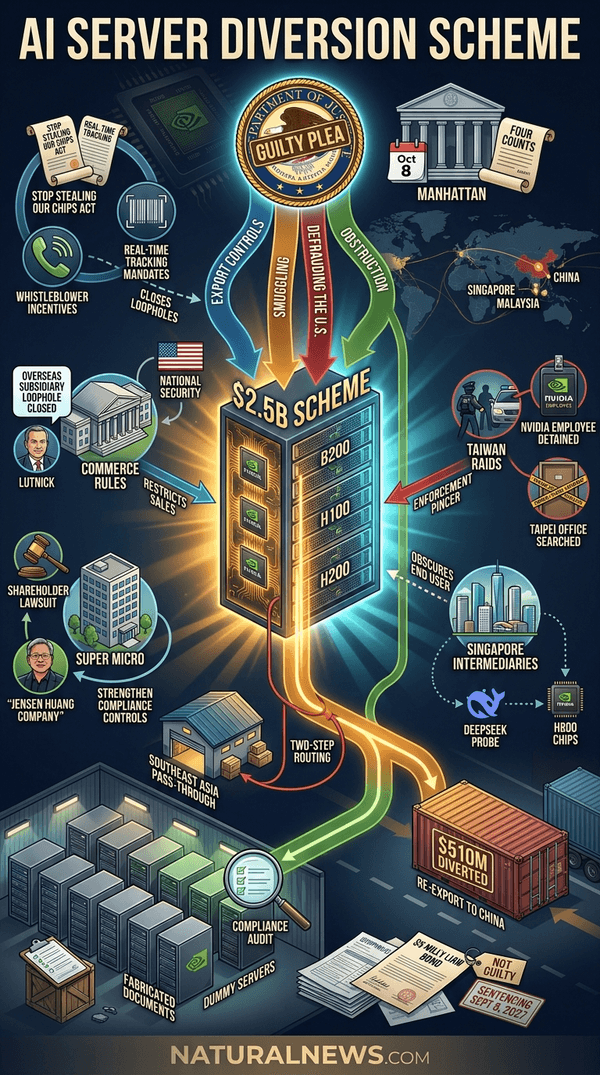
Ting-Wei “Willy” Sun entered the guilty plea in Manhattan federal court on October 8, according to court records and multiple reports [2][3]. He pleaded guilty to four counts: conspiracies to violate U.S. export controls, to smuggle goods from the United States, to defraud the country, and to obstruct justice, according to the court filing [4][5].
The case represents one of the most significant enforcement actions to date in Washington’s effort to halt the flow of restricted AI hardware to China. Prosecutors charged Sun and two others associated with Super Micro in March with conspiring to divert about $2.5 billion worth of U.S. AI technology to China in violation of export laws, according to the court filing [6][7].
Background on U.S. Export Controls and AI Chip Restrictions
The United States restricts sales of advanced AI chips to China on national security grounds, according to officials. According to the indictment, those restrictions cover Nvidia’s B200, H100 and H200 graphics processing units, as well as servers equipped with these chips [7]. The U.S. Department of Commerce has issued updated guidance restricting Nvidia’s sales of advanced artificial intelligence chips to China, marking the latest escalation in technology export controls between the two countries, with new rules announced in late May 2026 targeting Nvidia’s most sophisticated processors, including the Blackwell series [8].
Commerce Secretary Howard Lutnick has expressed worries that some advanced chip-making equipment may have already reached China, according to Bloomberg [8]. The guidance also closes a loophole that allowed Chinese firms to acquire restricted chips through overseas subsidiaries, the report stated [8]. U.S. officials have investigated whether Chinese AI startup DeepSeek used intermediaries in Singapore to acquire Nvidia’s H800 chips [9].
U.S. lawmakers have advanced two bills to combat China’s illicit acquisition of AI chips, including whistleblower incentives and real-time tracking mandates to close export control loopholes [10]. The Stop Stealing Our Chips Act offers whistleblower incentives as part of the legislative effort [10]. The broader enforcement push reflects concerns shared across administrations about the national security implications of advanced AI technology reaching Chinese entities.
Details of the Scheme and Guilty Plea
The scheme began around October 2023, with Sun and others conspiring to export servers from a U.S. manufacturer, widely believed to be Super Micro, according to Reuters [1]. Prosecutors alleged a scheme involving about $2.5 billion in server orders, with at least $510 million worth of systems diverted to China after U.S. assembly, according to the indictment [11]. The servers, equipped with Nvidia chips, were sent first to a company in Southeast Asia, then redirected to Chinese buyers, despite U.S. export restrictions [12].
When Super Micro’s compliance team planned an inspection, the defendants allegedly staged thousands of “dummy” servers — non-working, physical replicas of the real products — and placed them in warehouses where the pass-through company was supposedly storing the servers it had purchased, while the actual servers had already been unlawfully shipped to China, prosecutors said [13]. The indictment described fabricated documents, thousands of non-working dummy servers staged for audits, and a Southeast Asia pass-through company used to conceal true destinations and customers [11].
James J. Benjamin Jr., a lawyer for Sun, declined to comment, according to Bloomberg [14]. A sentencing date was scheduled for September 8, 2027 [14].
Responses From Super Micro, Nvidia, and Regulators
Super Micro has denied any knowledge of the operation even as it has netted $2.5 billion in sales since the scheme started in 2024, according to Tom’s Hardware. The company’s shareholders have sued it, accusing it of concealing its dependence on illicit sales to China [15].
Nvidia CEO Jensen Huang was quoted by Bloomberg News as saying Super Micro Computer must strengthen internal compliance controls after Taiwanese authorities detained three people accused of smuggling banned AI chips to China. “Ultimately, Super Micro has to run its own company,” Huang told reporters on Saturday in response to the chip smuggling probe [16].
On the enforcement side, Taiwan has intensified its efforts to stop advanced AI hardware from reaching China, carrying out raids at the local offices of Super Micro Computer and several businesses connected to an investigation into the movement of servers equipped with Nvidia chips, according to Bloomberg. Investigators searched multiple business locations and the homes of six individuals as part of the inquiry [17]. Taiwanese prosecutors have also detained an Nvidia employee and searched the chipmaker’s Taipei office, the first time the island’s criminal investigation into the diversion of restricted AI hardware to China has reached inside the company whose processors sit at the center of it, according to the Keelung District Prosecutors Office [18]. The co-founder of Super Micro, Yih-Shyan “Wally” Liaw, has pleaded not guilty in the case and was released on a $5 million bond [15].
Next Steps and Industry Impact
The case may affect compliance practices for AI server supply chains, analysts said, as it highlights how intermediaries and false end-user records can complicate enforcement of U.S. chip controls [20]. The U.S. has restricted sales of advanced AI chips to China on national security grounds since 2022 [21].
The broader context of U.S.-China technology tensions continues to shape the industry. In a separate but related development, the U.S. Department of Commerce announced on July 10 that the United Arab Emirates has been granted expanded access to advanced artificial intelligence technology without requiring an individual export license, recognizing the UAE’s support for U.S. national security interests [22]. Meanwhile, Chinese companies continue seeking access to advanced chips. ByteDance plans to spend $14 billion on Nvidia’s H200 AI chips in 2026, a sharp increase from its 2025 budget, despite U.S. export restrictions [23].
References
- Super Micro contractor pleads guilty in scheme to divert AI …. https://www.reuters.com/legal/government/super-micro-contractor-pleads-guilty-scheme-divert-ai-servers-with-nvidia-chips-2026-10-09/
- A contractor linked to Super Micro Computer has pleaded …. https://www.instagram.com/p/DeUk9J3DKH-/
- Super Micro contractor pleads guilty in scheme to divert AI …. https://semiwiki.com/forum/threads/super-micro-contractor-pleads-guilty-in-scheme-to-divert-ai-servers-with-nvidia-chips-to-china.26034/
- AI and Export Controls: A Legal Breakdown – GV Wire. https://gvwire.com/2026/10/10/super-micro-contractor-pleads-guilty-in-scheme-to-divert-ai-servers-with-nvidia-chips-to-china/
- Super Micro Computer (NASDAQ: SMCI) Contractor Pleads Guilty In $2.5 …. https://www.foreignpolicyjournal.com/2026/10/11/super-micro-computer-nasdaq-smci-contractor-pleads-guilty-in-2-5-billion-ai-server-smuggling-scheme/
- Super Micro contractor pleads guilty in scheme to divert AI…. https://www.investing.com/news/stock-market-news/super-micro-contractor-pleads-guilty-in-scheme-to-divert-ai-servers-with-nvidia-chips-to-china-4941793
- Super Micro Contractor Pleads Guilty in $2.5B China AI …. https://www.benzinga.com/news/legal/26/10/62287878/super-micro-contractor-nvidia-ai-chips-china
- Nvidia AI Chip Sales to China Face New U.S. Export Restrictions. https://www.naturalnews.com/2026-07-01-nvidia-ai-chip-china-face-export-restrictions.html
- Chinese ESPIONAGE Chinas DeepSeek may have exploited Singapore to obtain Nvidia chips – NaturalNews.com, February 05, 2025.
- Congress introduces bills to track AI chips and battle Chinese smuggling amid national security concerns – NaturalNews.com, May 12, 2025.
- U.S. Charges Three Tied to Supermicro in China AI Server Diversion…. https://particle.news/story/us-charges-three-tied-to-supermicro-in-china-ai-server-diversion-as-nvidia-wins-china-licenses
- Super Micro contractor pleads guilty in alleged… | Superpower Daily. https://superpowerdaily.com/posts/super-micro-contractor-pleads-guilty-in-alleged-2-5-billion-ai-server-smuggling-scheme
- Super Micro Execs Charged in $2.5B Scheme to Ship Nvidia AI…. https://www.eweek.com/news/nvidia-ai-server-smuggling-china-2-5b-scheme/
- Super Micro Case ‘Fixer’ Pleads Guilty to Diverting AI Servers. https://www.bloomberg.com/news/articles/2026-10-09/super-micro-case-fixer-pleads-guilty-to-diverting-ai-servers
- Super Micro smuggling co-conspirator pleads guilty to sending AI…. https://www.tomshardware.com/tech-industry/artificial-intelligence/super-micro-smuggling-co-conspirator-pleads-guilty-to-sending-ai-chips-to-china-broker-admits-breaking-export-control-rules-as-company-co-founder-denies-charges
- Nvidia CEO Urges Super Micro To “Enhance Compliance” Amid AI Chip-Smuggling Probe. https://www.zerohedge.com/technology/nvidia-ceo-urges-super-micro-enhance-compliance-amid-ai-chip-smuggling-probe
- Here We Go Again: Taiwan Raids Super Micro In AI Chip Probe. https://www.zerohedge.com/markets/here-we-go-again-taiwan-raids-super-micro-ai-chip-probe
- Nvidia’s Taipei Office Raided As Taiwan’s AI Chip-Smuggling Dragnet Results In Arrests. https://www.zerohedge.com/ai/nvidias-taipei-office-raided-taiwans-ai-chip-smuggling-dragnet-results-arrests
- Super Micro Contractor Pleads Guilty in $2.5B AI Server Case. https://fourweekmba.com/ai-super-micro-contractor-pleads-guilty-in-2-5b-ai-server-case/
- Super Micro contractor pleads guilty to diverting Nvidia AI servers…. https://www.cryptopolitan.com/super-micro-contractor-pleads-guilty-to-diverting-nvidia-ai-servers-to-china/
- Taiwan Raids Super Micro in Widening Probe of Alleged Nvidia…. https://www.techtimes.com/articles/319476/20260701/taiwan-raids-super-micro-widening-probe-alleged-nvidia-ai-server-smuggling.htm
- U.S. Grants UAE Expanded Access to Advanced AI Technology After Support in Iran Conflict – NaturalNews.com, July 18, 2026.
- TikTok parent ByteDance goes all in with 14B Nvidia chip SPLURGE – NaturalNews.com, January 02, 2026.
Explainer Infographic
Submit a correction >>
Tagged Under:
AI, AI chips, artificial intelligence, big government, China, computing, conspiracy, cyber war, deception, export, Glitch, information technology, national security, NVIDIA, Restrictions, sanctions, semiconductor, smuggling, Super Micro, supply chain, technology trade, Ting-Wei Willy Sun, traitors
This article may contain statements that reflect the opinion of the author
RECENT NEWS & ARTICLES